
Max Zorn · Living with the art
Art for interiors
and commissions
A room can take its character from the view on its wall. In Max Zorn’s art, that view might open onto a crowded saloon, a palm-lined waterfront or a city still awake long after the house has quietened.
Max builds his images by hand from layers of packing tape on acrylic glass. Light passes through the material, bringing out the faces, architecture and depth of the scene. The illuminated artwork remains clear by day; as the room darkens, its warm glow becomes part of the evening. Brightness can be adjusted to suit the setting.
These artworks, photographs and design studies are reference examples, not works available for immediate purchase. For a particular room, the studio can discuss current availability or a possible commission.
Home bars and tasting rooms
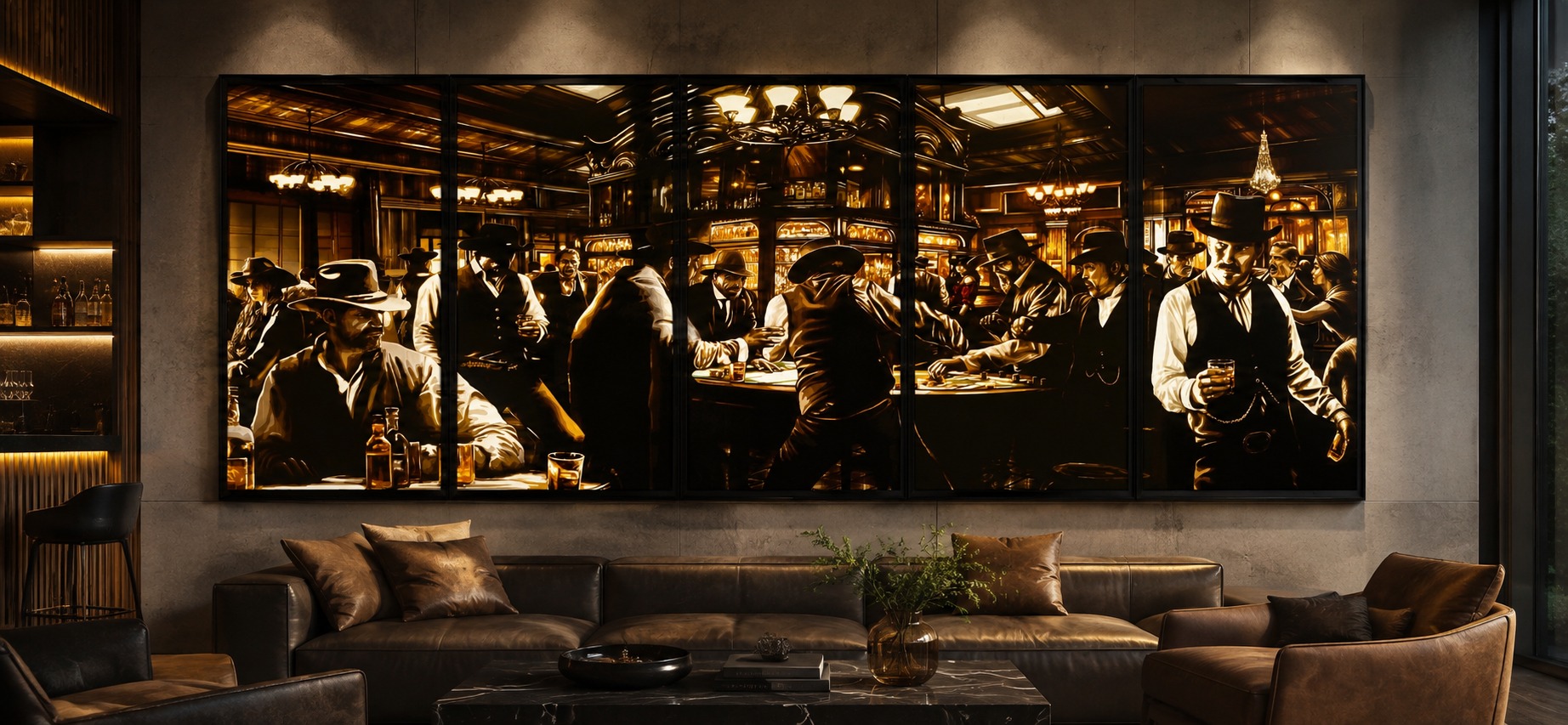
The crowded saloon in Sting of Pride gives a home bar plenty of company. Card players lean towards the table, glasses catch the light, and chandeliers repeat into the room beyond. The composition rewards a long look: the conversation at the counter is quite different from the one taking place over the cards.
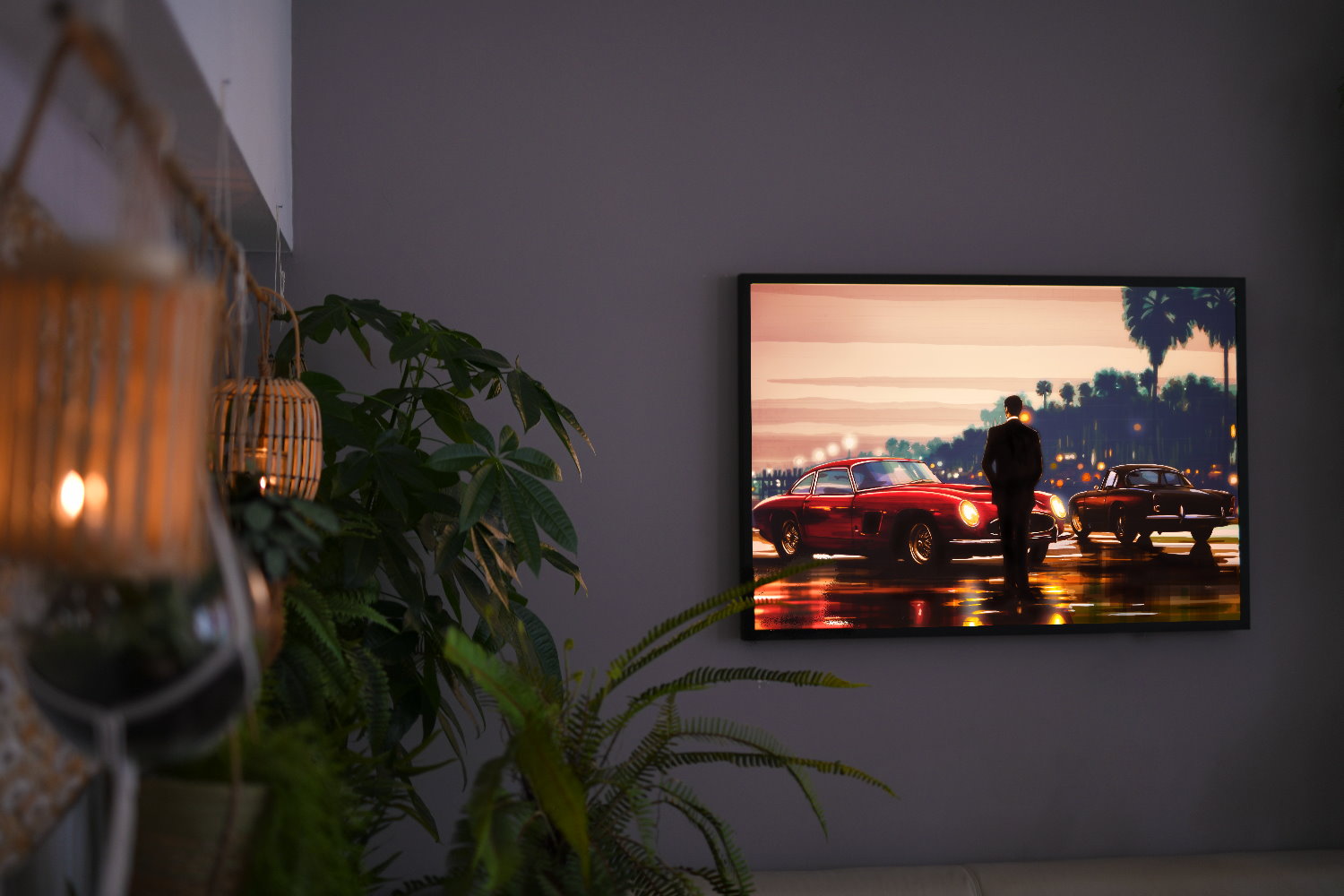
Caribbean Nights offers a more private evening. A suited man stands beside a red coupe on a palm-lined waterfront. The car, the open water and his reserve bring the pleasure of classic motoring together with the suspense of cinema.
Both directions can sit comfortably with dark timber, leather, brass and restrained evening lighting. The choice begins with the collector’s taste: conviviality, a little tension, or the feeling of being somewhere far from the ordinary day.
Listening rooms, libraries and quiet corners
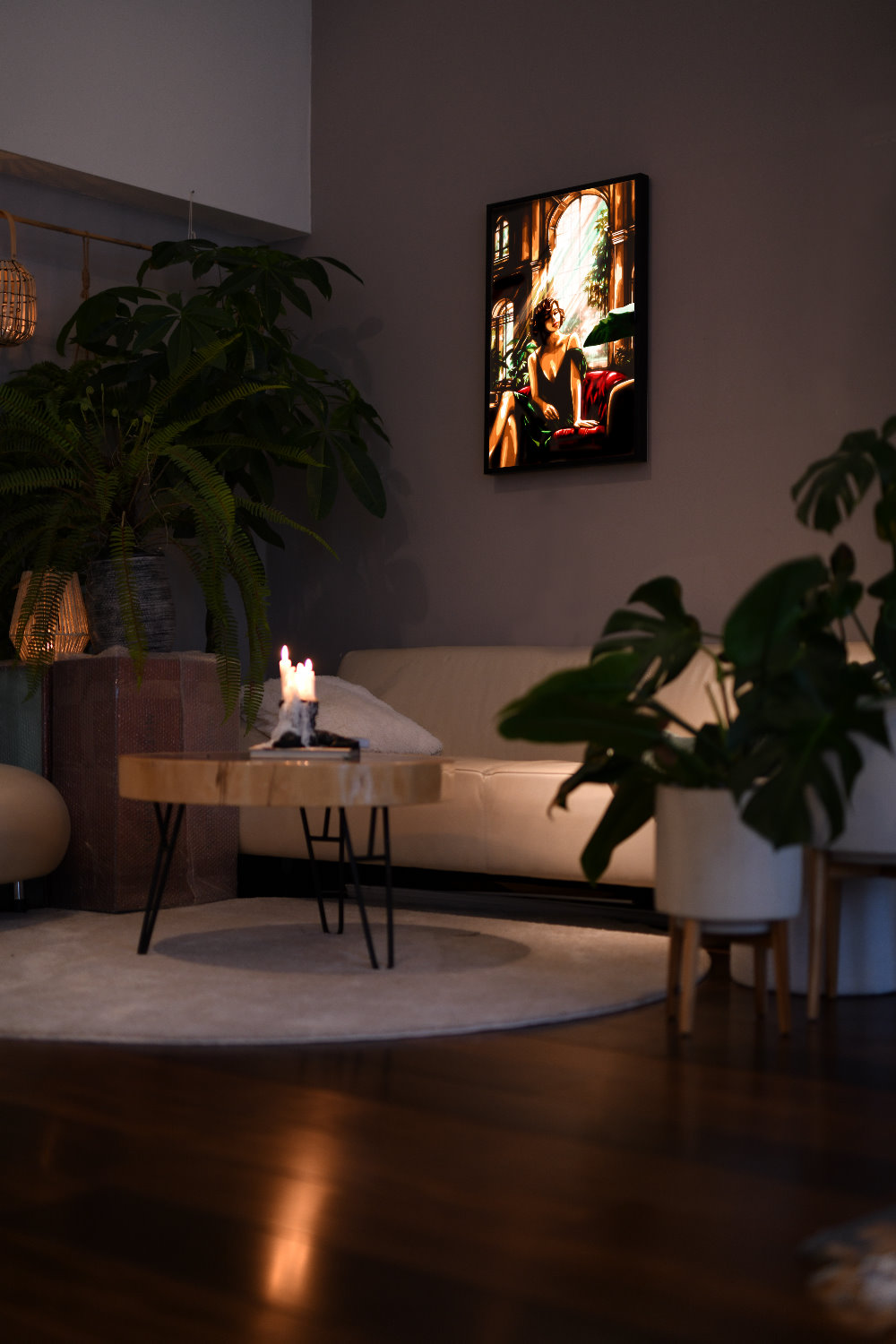
Some spaces call for a closer encounter. In Reverie, a woman sits beside a tall arched window, surrounded by broad leaves and a red chair. The daylight inside the image brings another kind of warmth to a reading corner or a room filled with plants.
A music room can draw on Max’s singers, street musicians and nocturnal scenes. A library might find its companion in a traveller, a solitary figure or an unfinished encounter. The connection becomes more personal when it starts with a place remembered, a kind of music or a story the collector keeps returning to.
The artwork guide explores these differences through individual works, with interviews and critical writing behind them.
A city across the wall
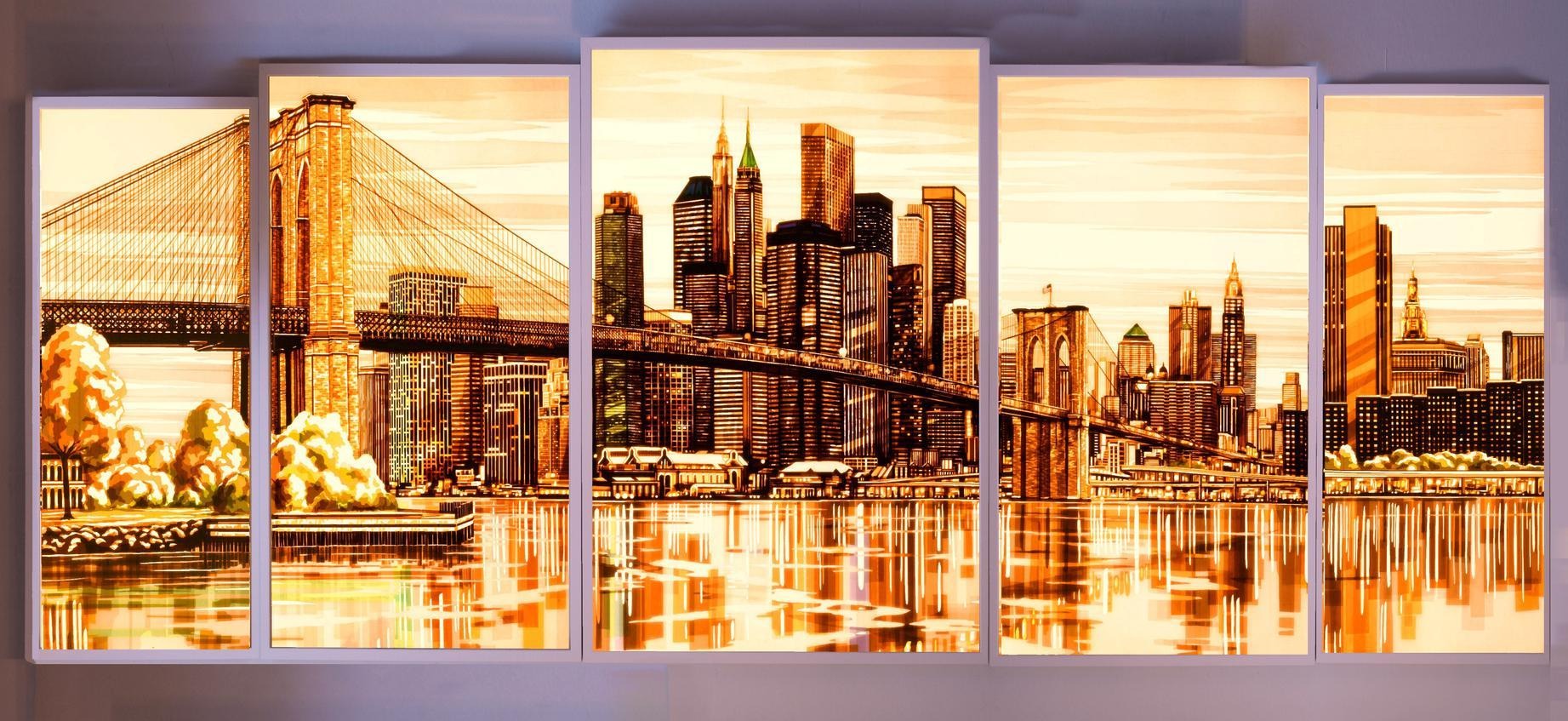
Large compositions have two lives: the structure seen across a room, and the details discovered on approach. Dream spreads a city and its waterfront across five frames. In Let them have the rest, we own the night baby, an embracing couple gives a vast theatre district its private centre.
These works suggest possibilities for a broad living-room wall, a hotel lounge or an entrance with room to step back. Proportion, sightlines and frame arrangement matter as much as the available width.
Working with the architecture
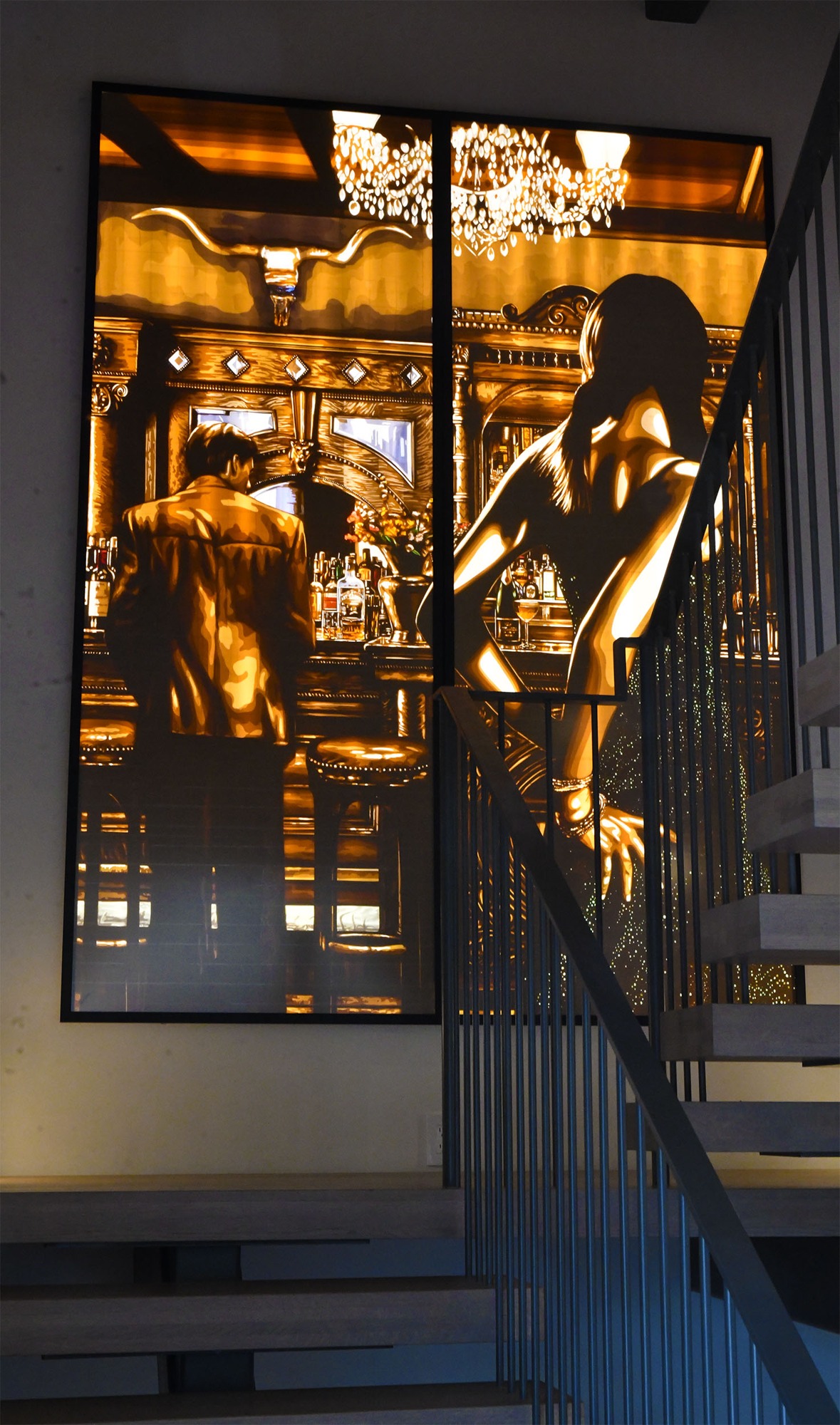
A tall composition answers a different space. This Texas installation carries its figures and bar interior through the height of the wall beside a staircase. The artwork can be encountered from below, on the stairs and at closer range.
For hospitality projects, the atmosphere needs to hold its own through daylight, evening service and changing viewpoints. Max’s artworks have also been displayed at Bowie House in Fort Worth; the exhibition record shows that setting.
A project can begin with a city, an architectural setting or a personal connection to place. Max’s artistic direction and the practical requirements of the space are developed together with the collector or advisor.
Cigar boxes and vintage crates
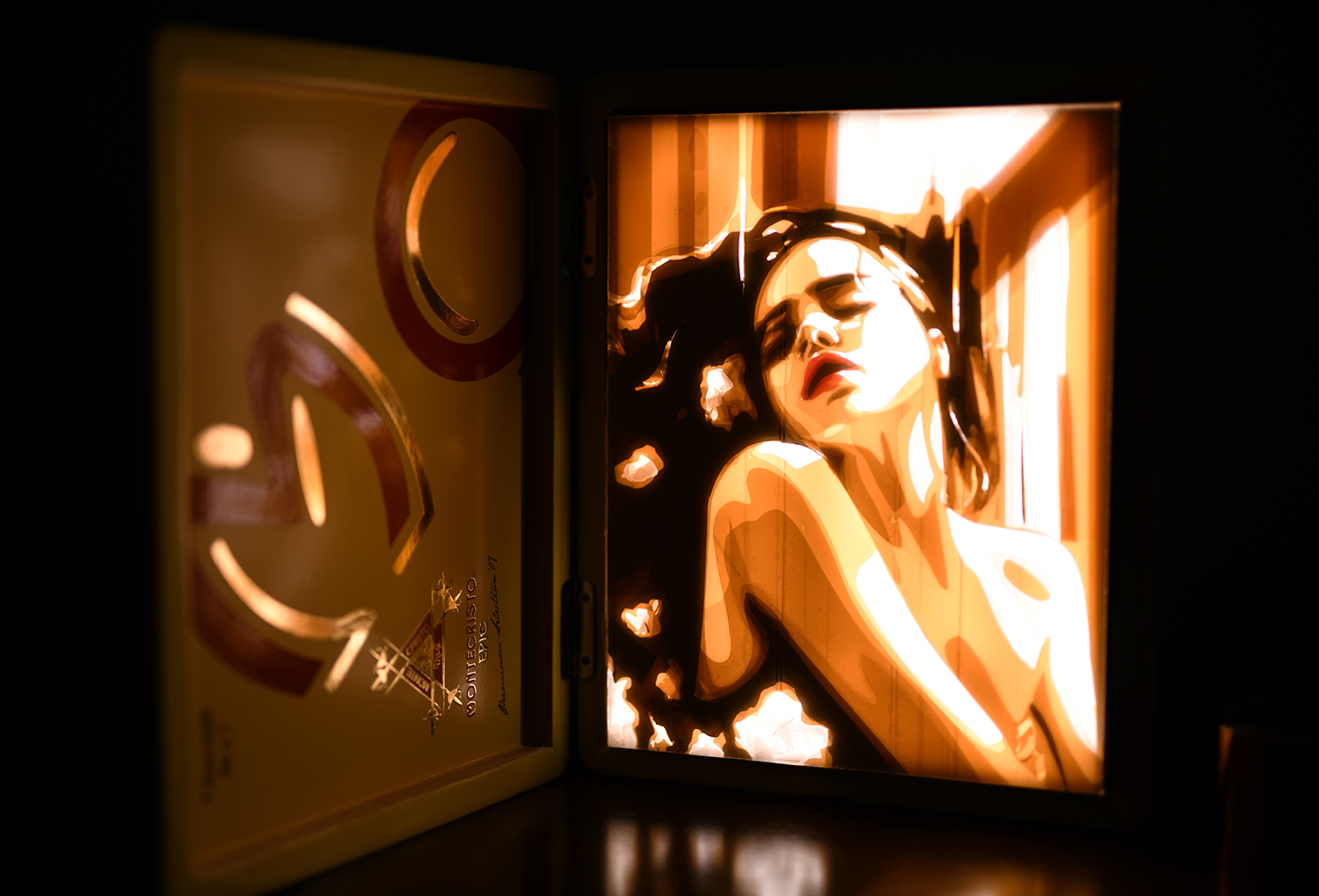
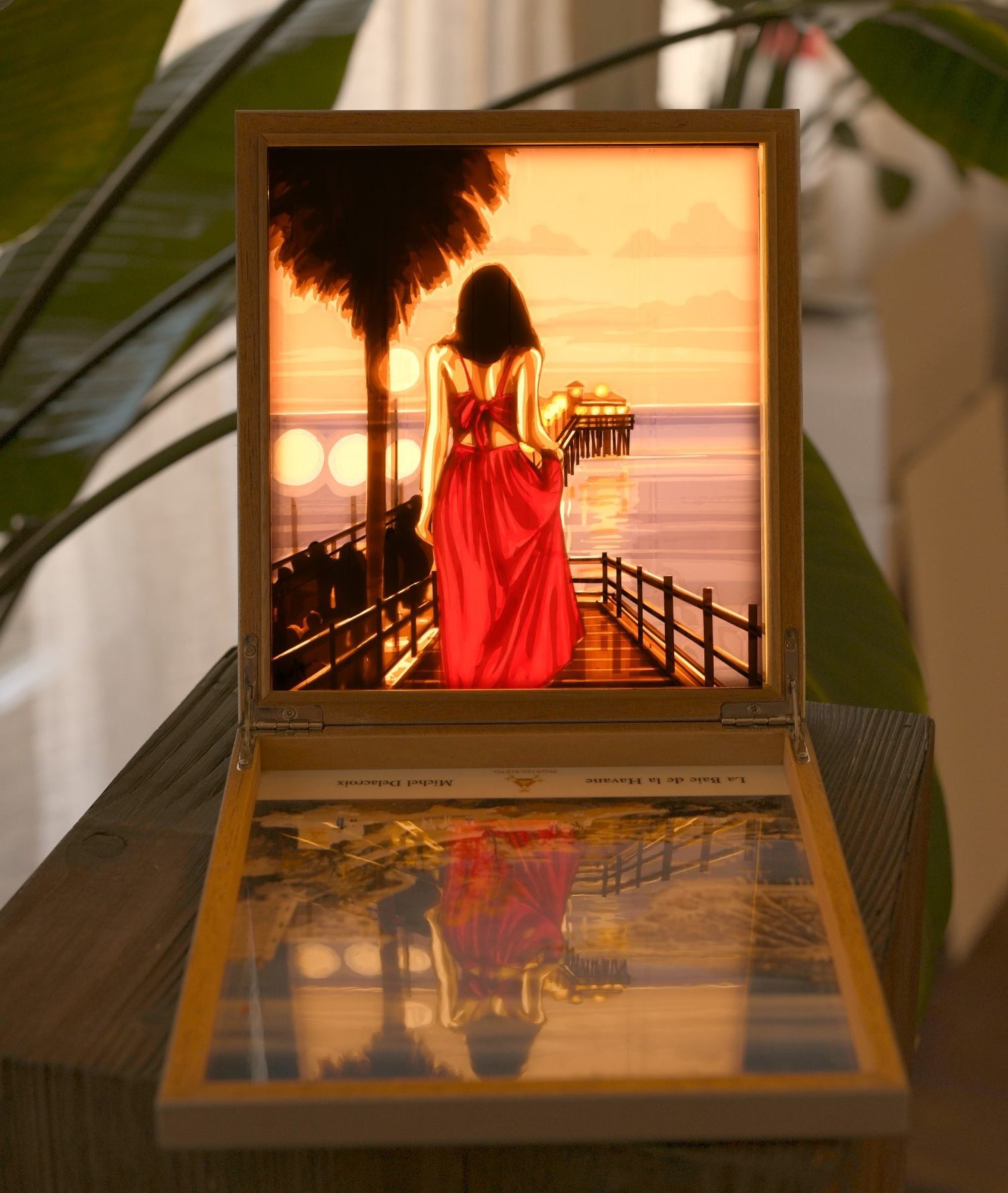
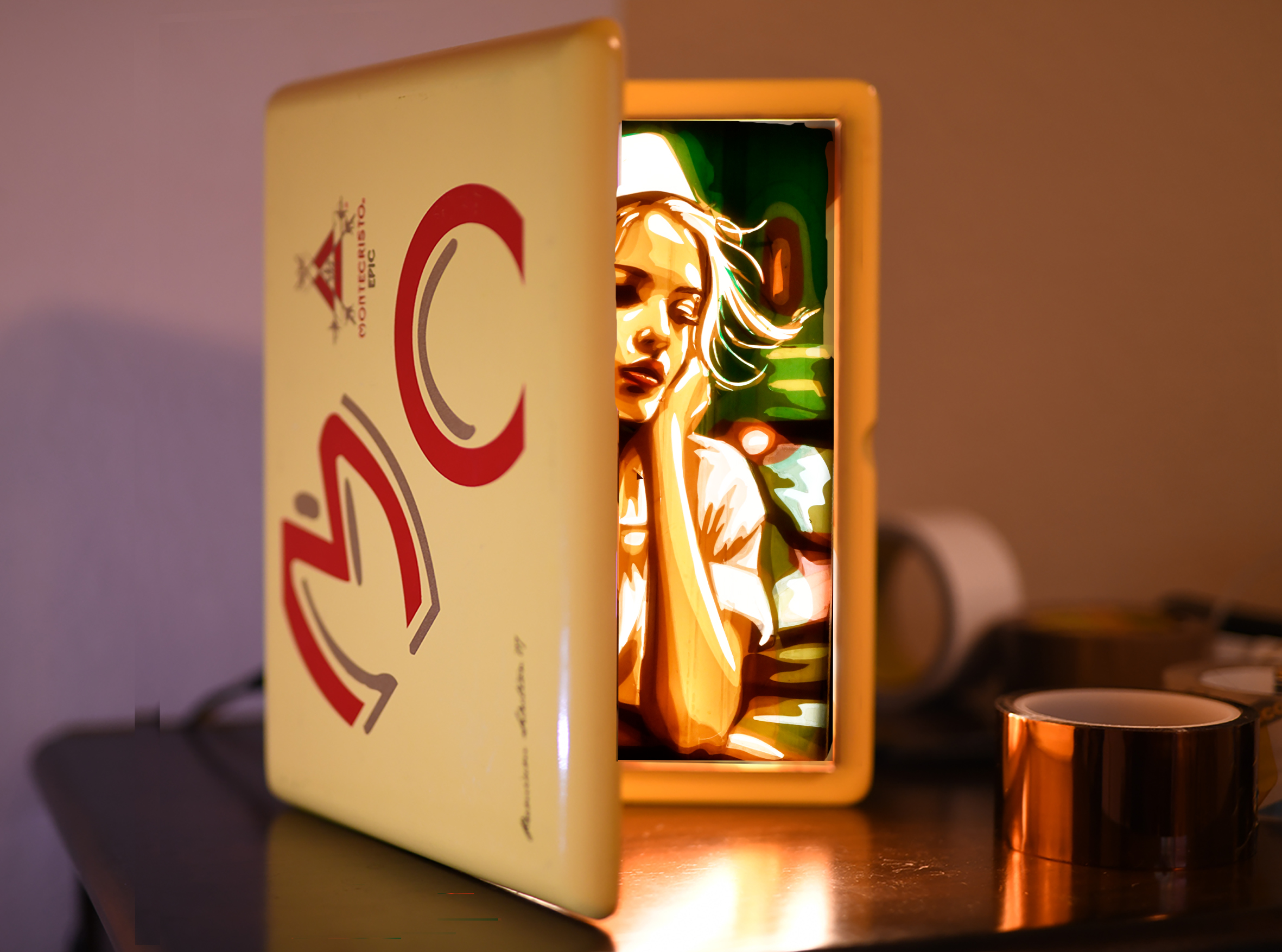
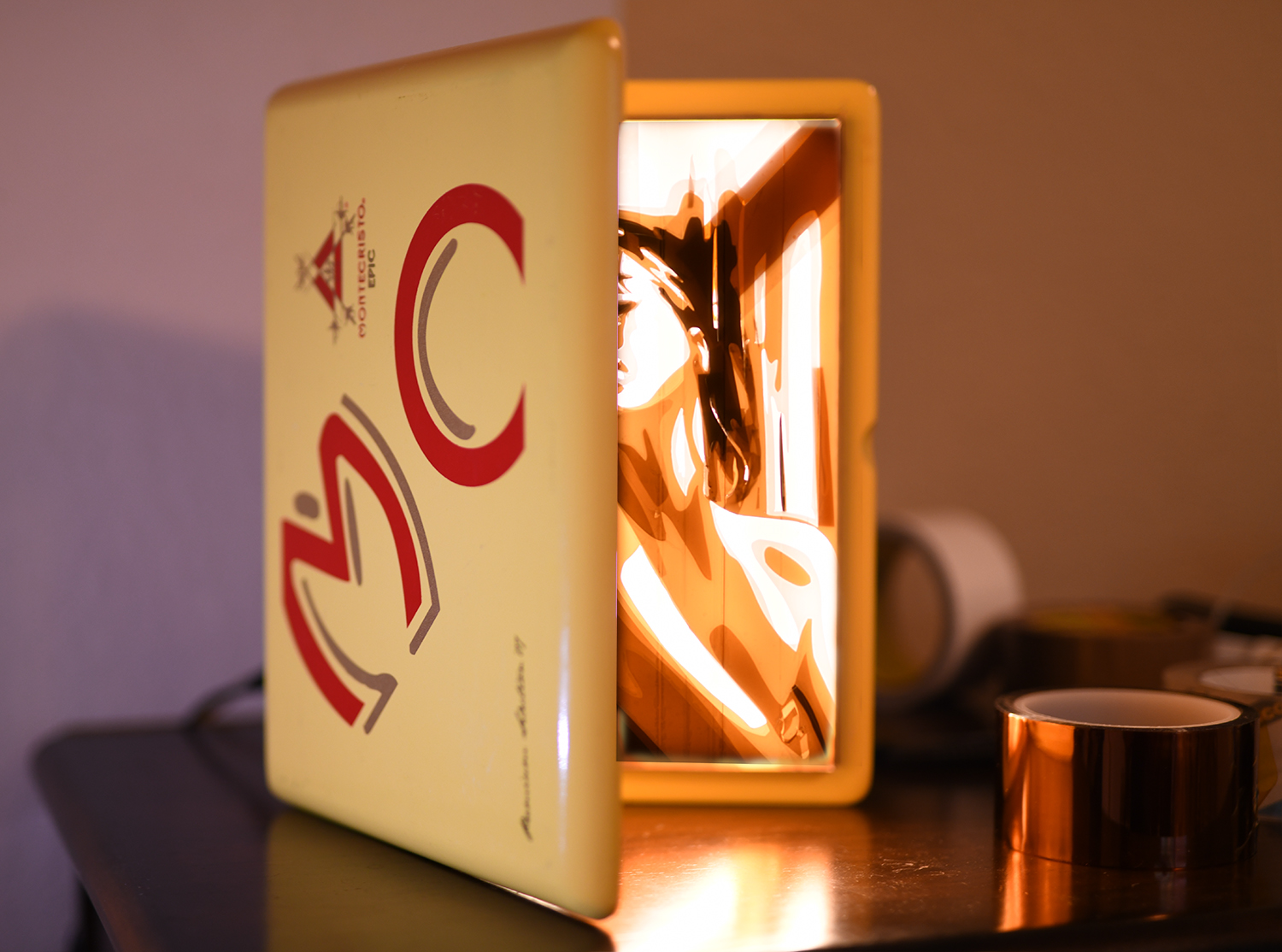
Max’s cigar-box artworks bring illuminated tape art into the space of everyday objects and close looking. In Nocturne, a woman’s closed eyes and upturned face fill the small image; the open box catches a warm reflection on the tabletop. A coastal scene offers a different escape: a woman in red facing the light over a seaside pier.
On a console, a desk or beside a record player, the depth of the box and its opening lid are part of the encounter. This is a useful direction for a collector who wants an intimate artwork with a presence beyond the wall.
Americana in the frame itself
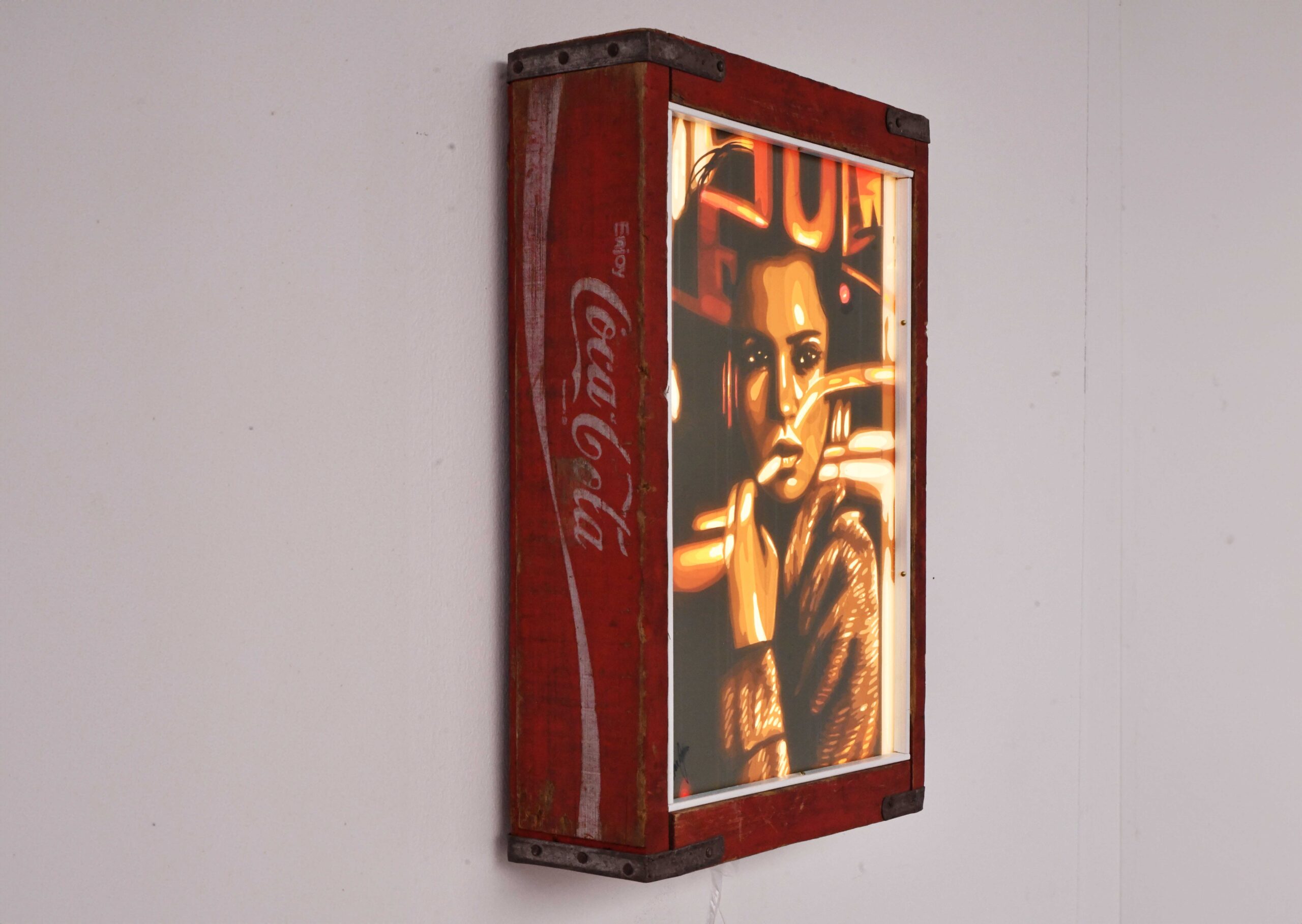
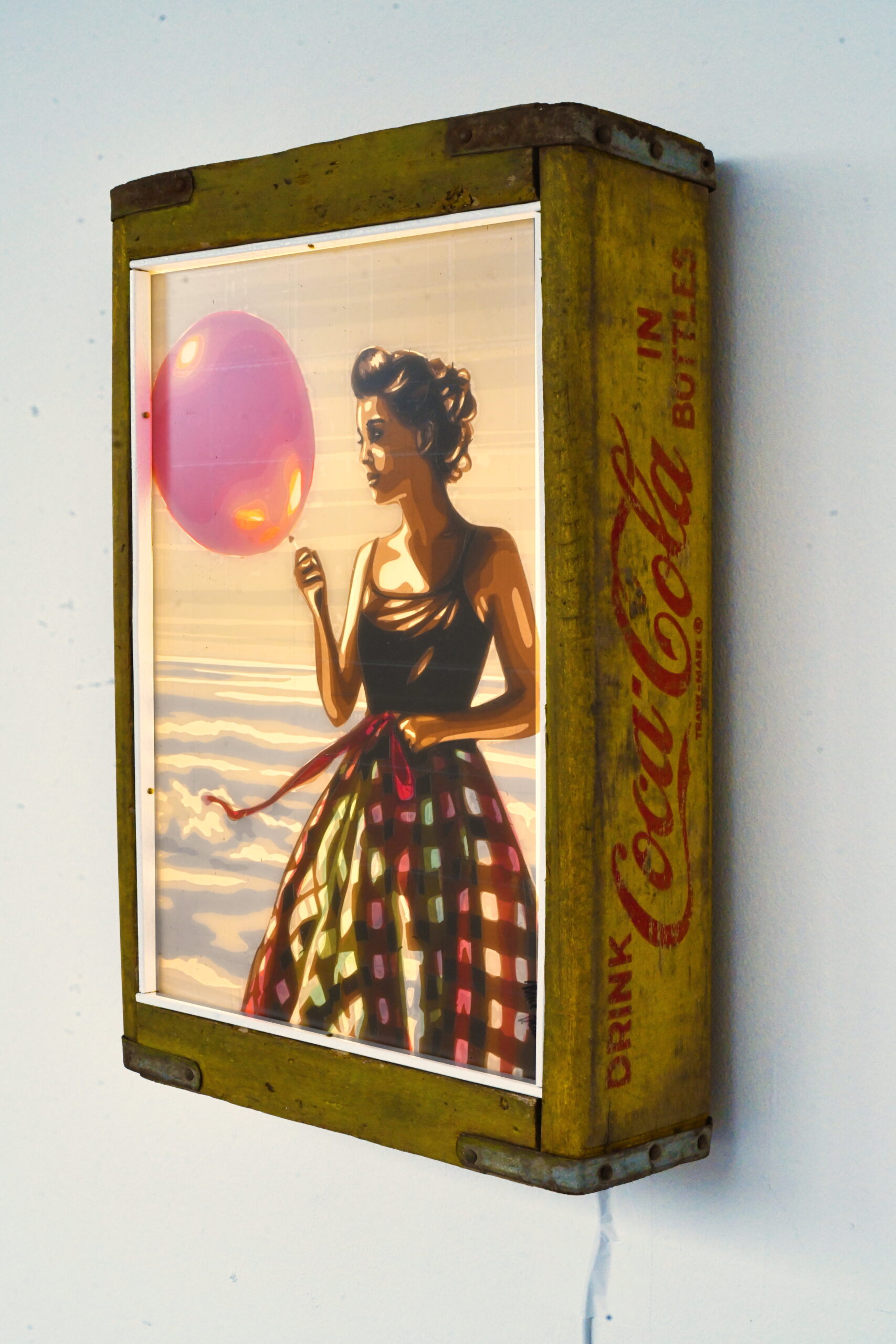
Other artworks are framed in original Coca-Cola crates from the 1960s and 1970s. Worn paint, lettering and metal corners give the object a history beyond the image. The red crate around a nocturnal portrait and the yellow crate around a sunlit woman in a checked skirt lead to quite different moods.
For someone drawn to vintage advertising, roadside Americana or collected interiors, the container can be part of the attraction. Its colour, proportions and traces of use belong in the choice alongside the artwork. Particular boxes and crates vary; the studio can advise on subjects and formats.
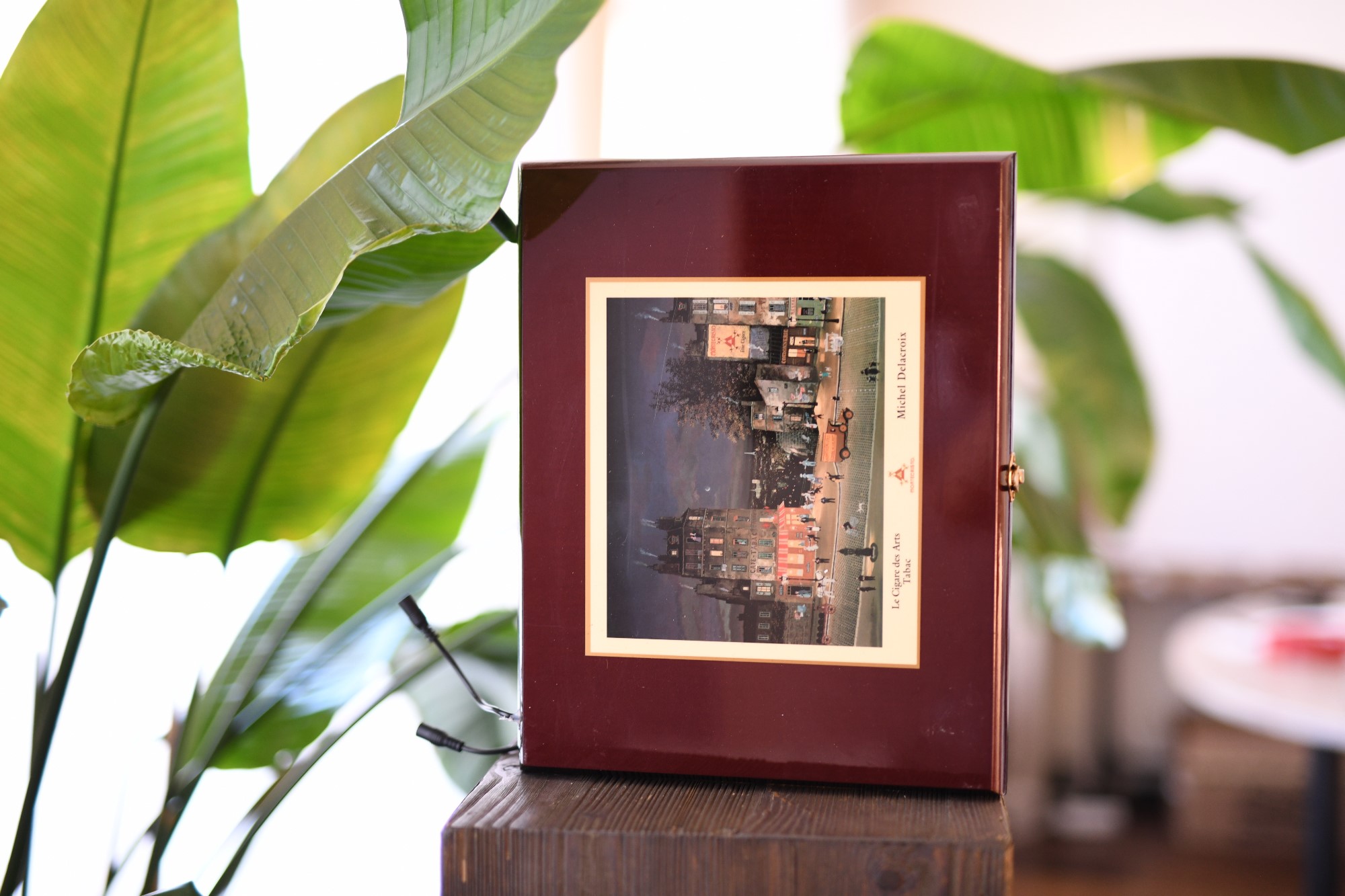
See the cigar-box format from other angles
Light, frame and placement
The lighting uses warm-white 12 V LEDs with a plug-connected AC/DC power supply. Dimming and discreet electrical integration can be arranged with a qualified electrician; the appropriate controls and what is supplied are confirmed for the particular artwork and project.
- Brightness and controls
- Dimmable lighting lets the artwork sit within the room’s evening atmosphere. Dimmers and switches are not included as standard; discuss the preferred control arrangement with the studio.
- Power and installation
- A mains power connection is needed. Plan cable routing and access to the power supply with the installer; compatibility with a particular wall dimmer or control system needs checking.
- Frame and size
- Framed wall works, cigar boxes, vintage crates and multi-panel compositions offer different physical formats. Confirm the exact dimensions, depth, weight and mounting requirements for the chosen work.
- Care and service
- Use an indoor setting away from prolonged direct sunlight and strong heat. The modular lighting can be serviced separately from the tape image. A refrigerated or unusually damp cellar needs a separate suitability discussion.
Frames and lighting · Materials and care · Sizes and formats
Discuss a work or a commission
Collectors, interior designers, art advisors and their assistants are welcome to contact Audrey and the team. A room photograph, approximate dimensions, location, preferred artworks and any important date are enough to begin. An indicative budget helps the team make relevant suggestions.
The conversation may lead to an available artwork or to considering a new commission. For a commission, Max develops the artistic direction in relation to the project; scope, price and timing are agreed individually. The commissioning information explains the wait for a free slot.
Still exploring? The newsletter connects an interest in these examples to new artworks and future opportunities to collect.
Preparing a brief for a designer, art advisor or assistant
Start with the person’s taste and the setting. A home bar can call for lively company or a solitary figure; a large wall can suit an intimate encounter as well as a skyline.
- Share two or three preferred artworks and what draws the collector to them.
- Include a room photo, available wall or display dimensions, location and any firm deadline.
- Note the preferred format, approximate budget, daylight conditions and power access.
- Identify the collector or project you represent and the reply address to use.
Confirm actual availability, dimensions, price, timing and installation details with the studio before making a recommendation dependent on them. Sending an enquiry does not reserve a work. The pictured examples and design visualisation are not current sale offers.
For the career, provenance and collecting record, see For collectors and their assistants. For subjects, mood and critical sources, see the artwork guide.
Photographs, artwork references and technical information supplied by the studio. Updated .