
Inside the artwork
How Max Zorn makes tape art
A city full of faces, traffic and theatre lights. A couple watching it together. The scene in Let them have the rest… takes shape through decisions about where a strip of packing tape stays, and where it comes away.
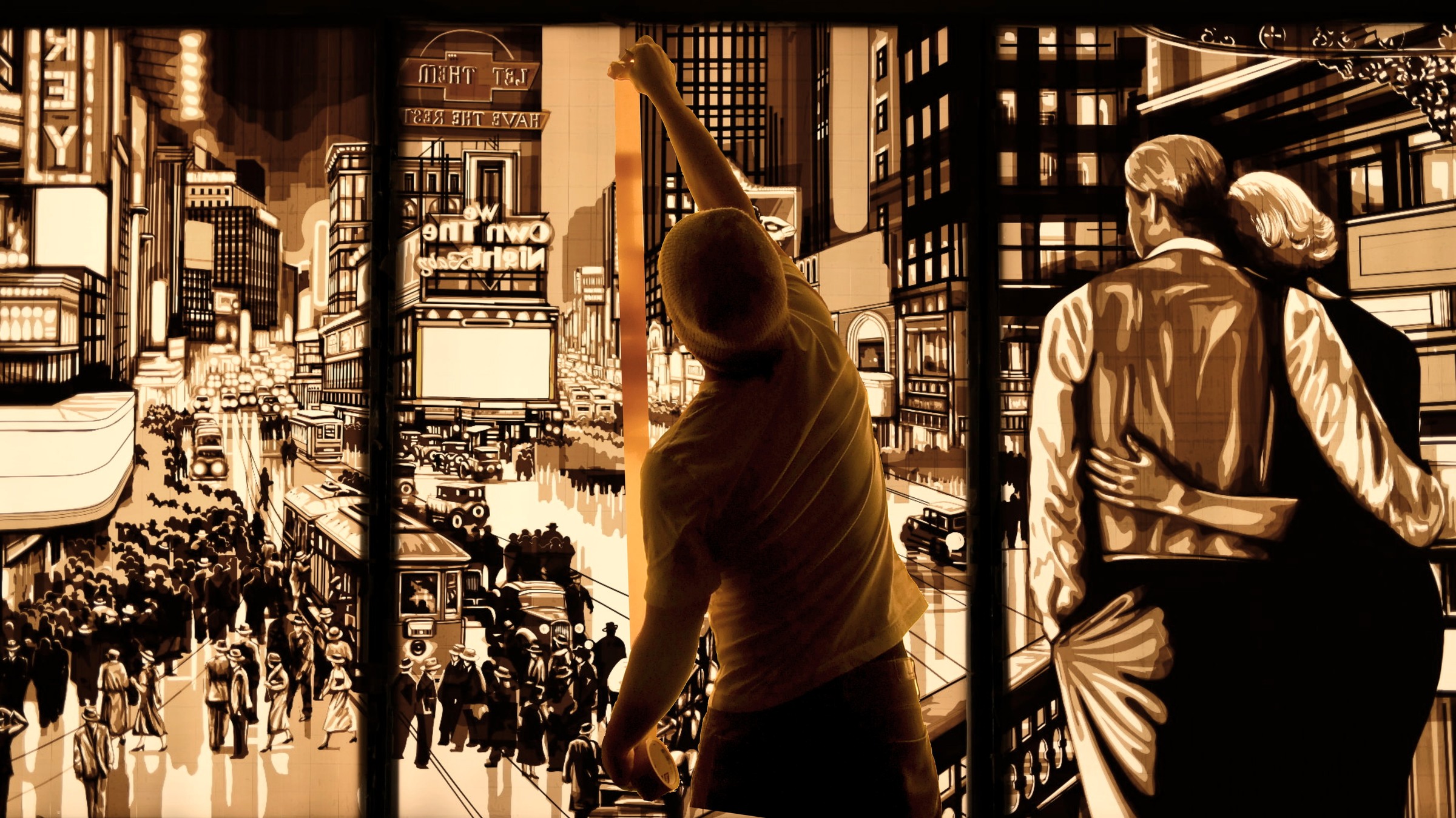
Packing tape, a blade and light
Max makes original tape art by cutting and layering packing tape on transparent acrylic glass. There is no printed picture beneath it. The faces, buildings and reflections are formed by the material itself, with light passing through the finished image.
Building the tones
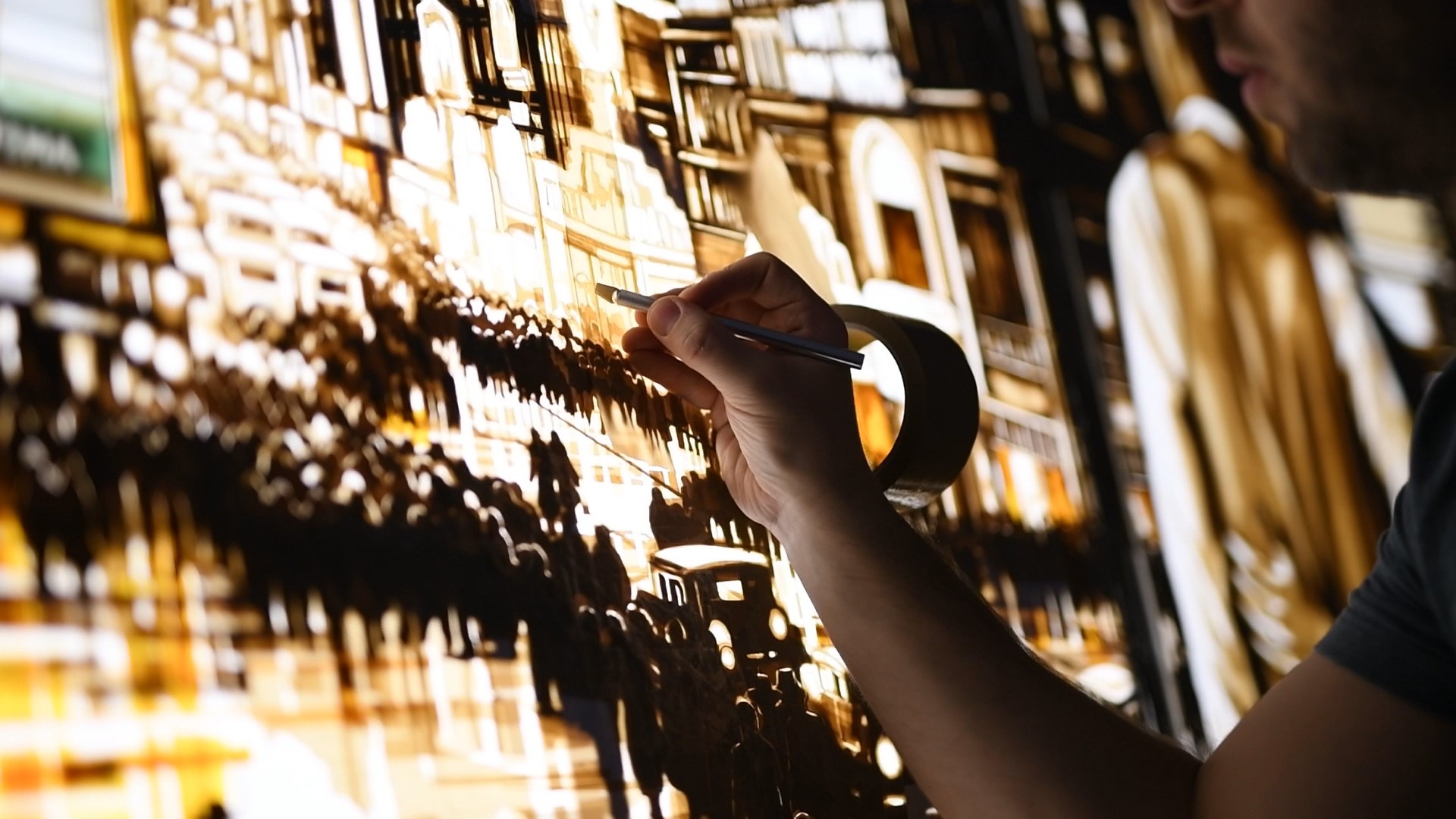
A single layer of brown tape lets more light through than several overlapping layers. A bright window and the dark coat of someone standing beside it can therefore be made from the same tape. Max builds their difference by adding material, cutting shapes and removing selected pieces.
A cut becomes part of the drawing
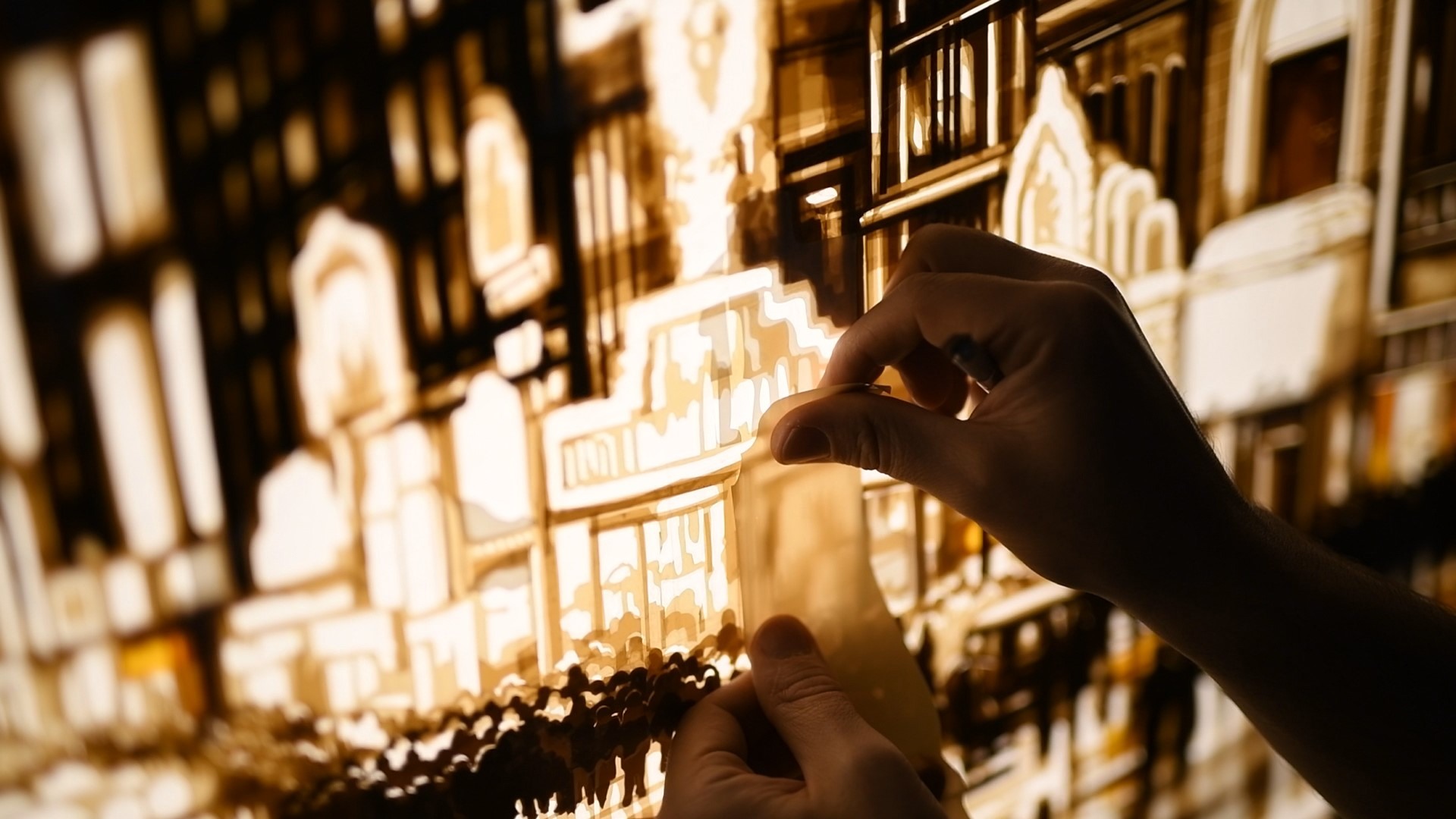
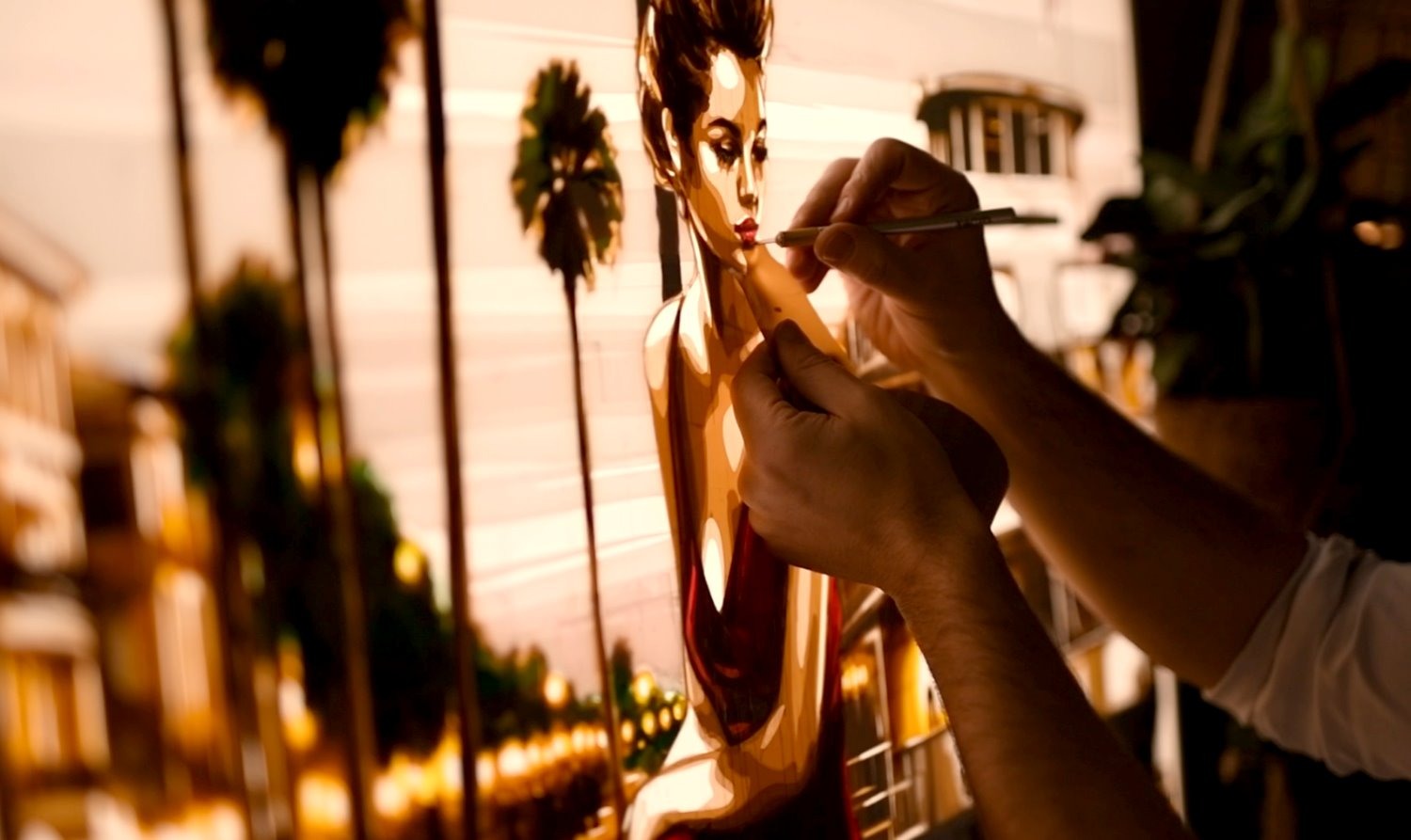
The blade has to reach the intended layer. A deeper cut can lift away material Max wanted to keep. In his CBS Sunday Morning interview, he demonstrates how each addition must be adjusted against the image beneath it. A small change can alter the expression of a face or the edge of a reflection.
The tape also affects the composition. Its straight edges and overlapping shapes suggest possibilities as Max works. In his TEDxTUM presentation with Audrey Sykes, he describes responding to what develops on the acrylic. The making involves decisions about the picture as well as control of the knife.
From a city at night to an open horizon
Brown tape gives many of Max’s scenes the colour of an old photograph, but his compositions need not belong to one remembered place or period. In his BBC News interview, he describes bringing cars from different decades into the same image. Familiar details become part of an imagined story.
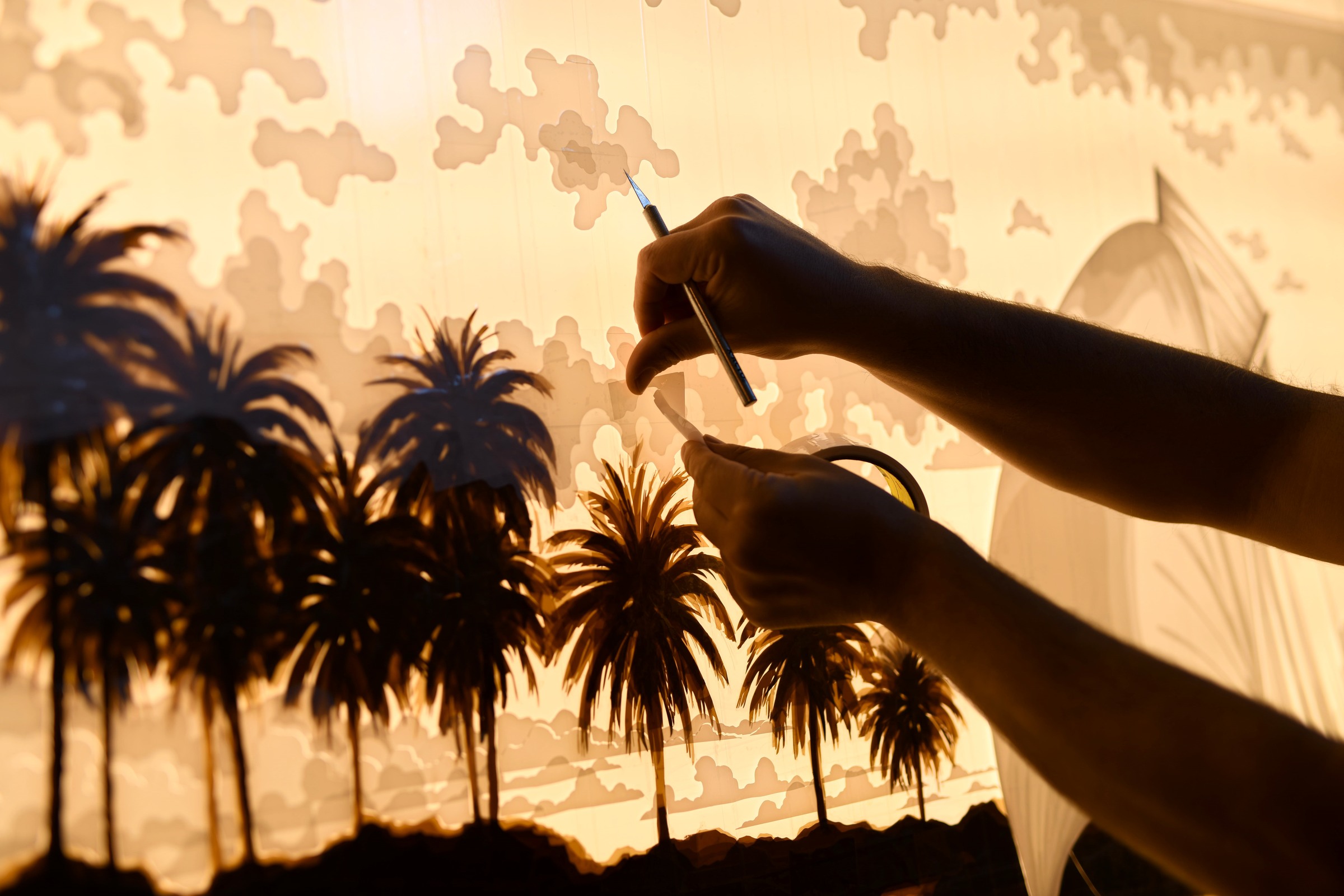
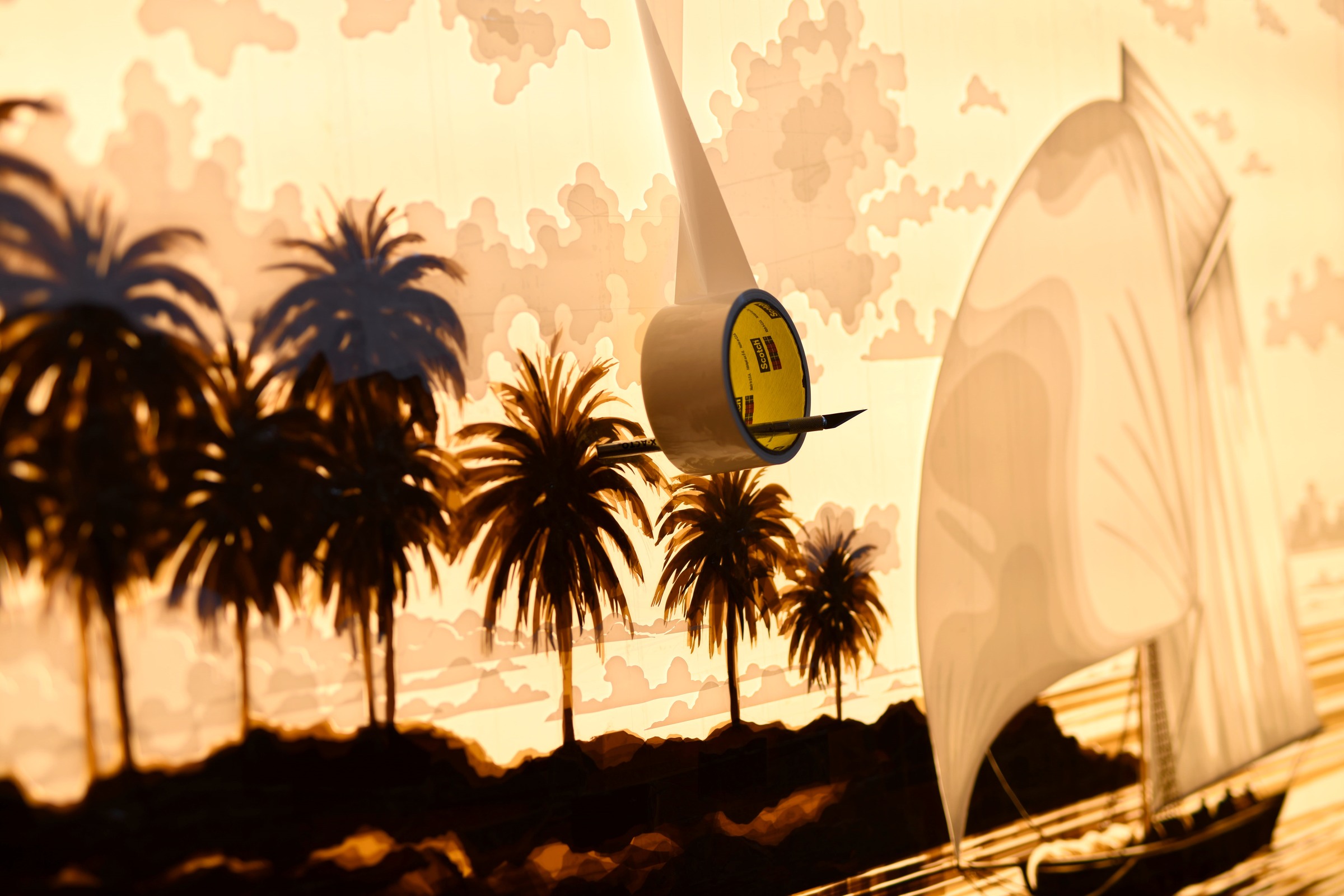
In Sail, the pace changes. Palm trees frame the water and the sailboat; the wide sky leaves room around them. The process photographs show how these open, pale passages sit beside the densely layered palms.
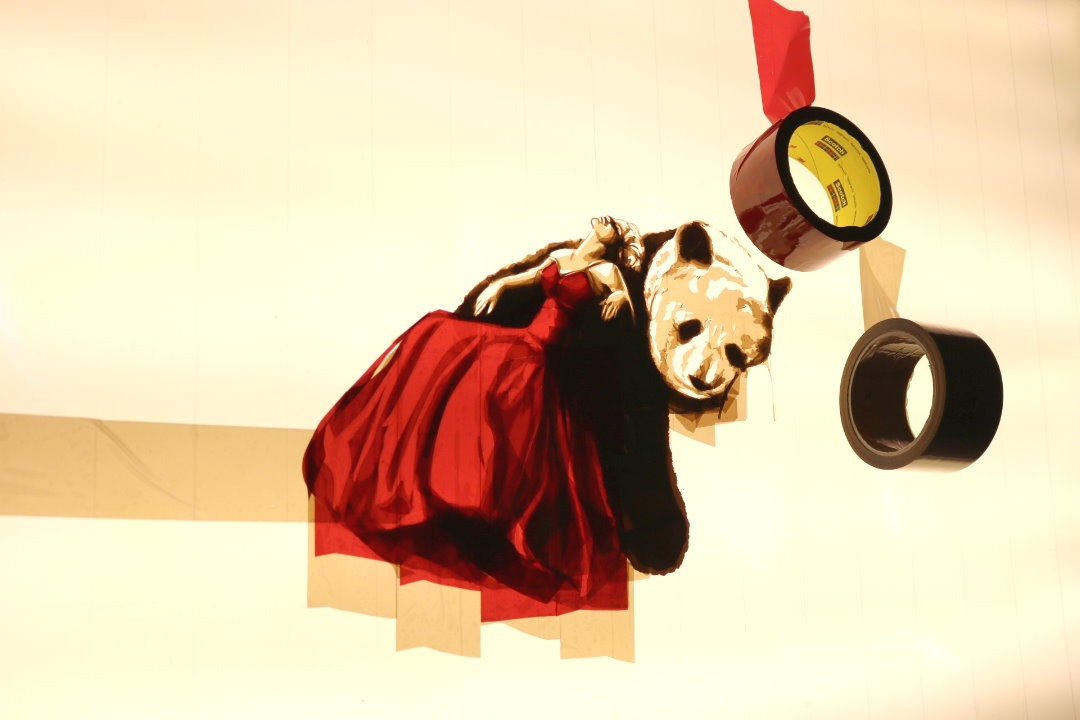
Max also works with coloured packing tape. The red dress in this early stage of The great escape already draws the eye across the incomplete composition. Colour comes from the tape itself, while the same layering process builds the darker folds and the panda’s face.
Watching the artwork happen
At international art fairs, Max often works in front of an audience. From a distance, visitors see a picture. Up close, they can follow the cut, the strip being lifted and the change it makes to the scene.
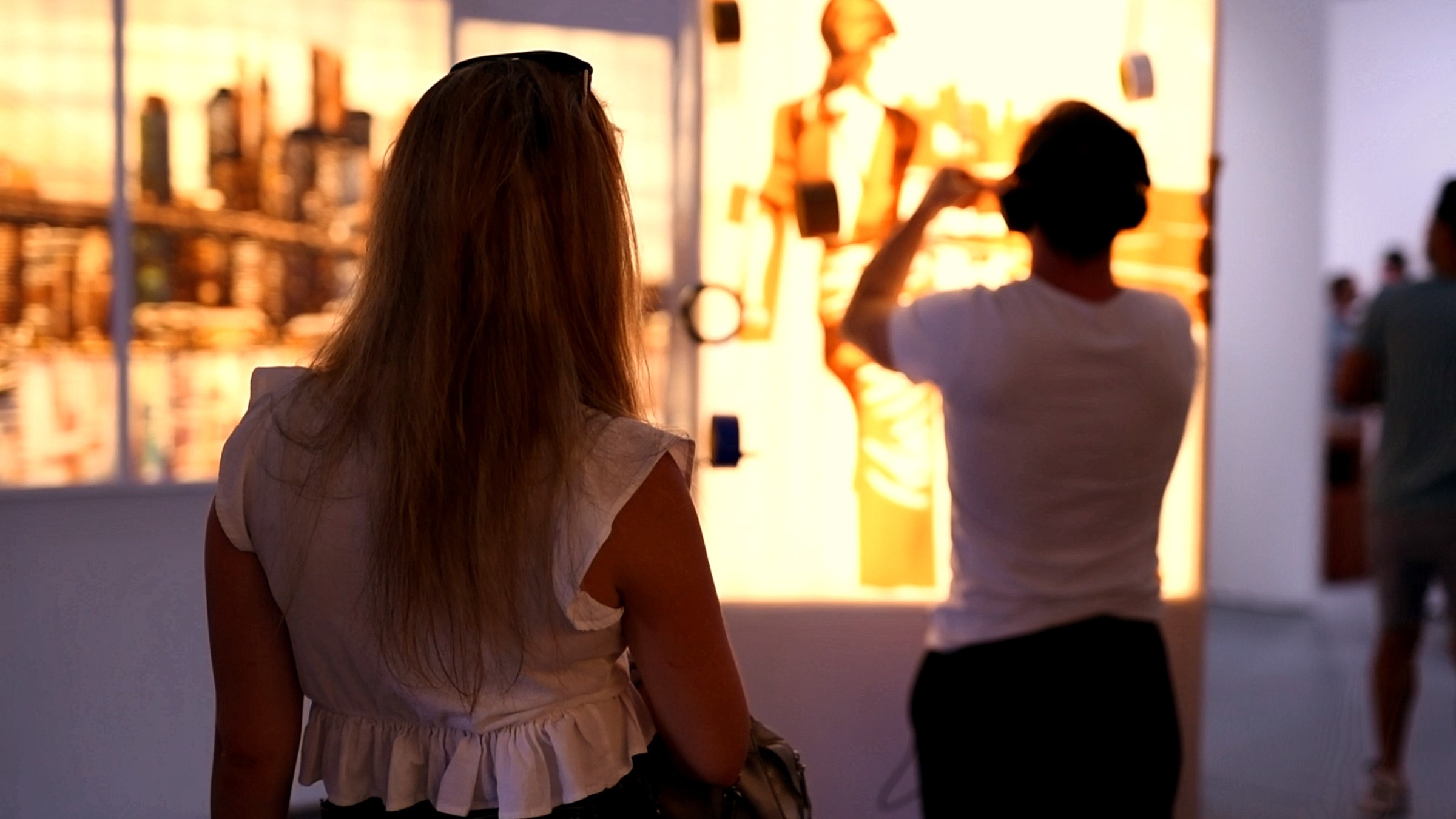
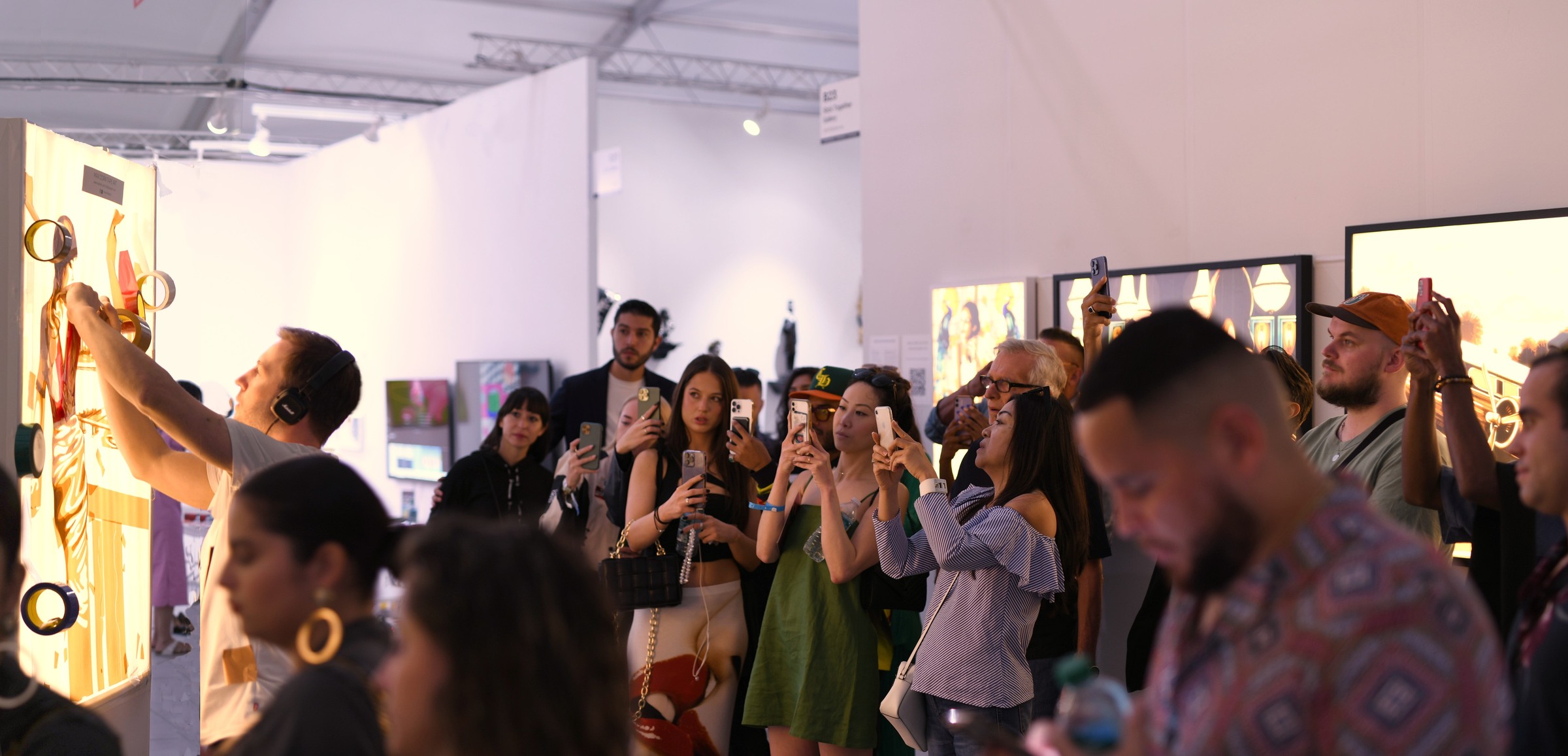
In his Art Business News interview, Max explains how demonstrating the process helped people understand the material. The finished work has also been presented in museums: City Lights, his 2022–2023 solo exhibition at Munich’s Museum of Urban and Contemporary Art, brought together artworks from different stages of his practice.
The finished artwork, illuminated
The image is made to be seen with light passing through it. Backlighting reveals the separation between the thin tape and the densely layered areas, from a pale face to a dark street below. The light is part of how the picture is seen.
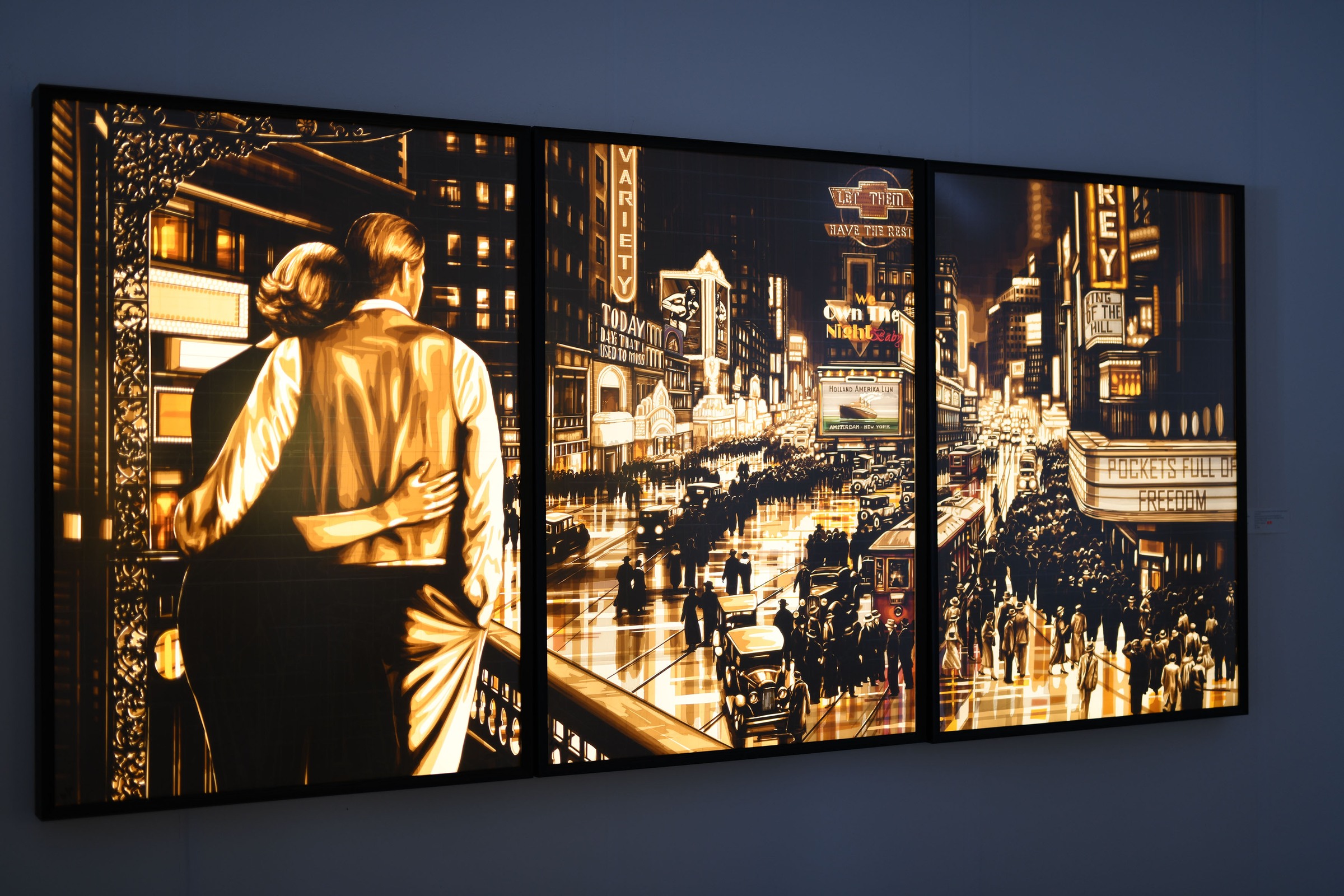
Collector artworks use custom LED lightboxes. Protective glazing and the frame belong to the finished object, with the construction and format depending on the artwork. The care, framing and display guide explains the lighting, protection and practical details of living with original tape art.
A process that began on Amsterdam’s streets
Max began placing small tape artworks on Amsterdam street lamps in 2011. The city supplied the light, and passers-by became the audience. Through the historical Stick Together project, other people carried handmade artworks to new places and returned photographs of their installations.
The street art archive follows that public side of the work. The history of tape art places Max’s approach beside other artists’ uses of adhesive tape.